

Southwark Cathedral is the cathedral on the south bank of the Thames beside London Bridge, a working church whose documented history stretches back to a minster named in the Domesday Book of 1086. Its present form was shaped by a Norman priory, a long parish-church era linked to Shakespeare’s theatre world, and a Victorian nave. It is open every day, though services and events can restrict access, so choose your time with care.
- Southwark Cathedral is at London Bridge, London SE1 9DA, according to its Southwark Cathedral visitor information page.
- Cathedral opening hours are Monday to Saturday 09:00–18:00 and Sunday 08:30–17:00, with recommended sightseeing windows because services restrict access.
- On Thursday 3 December 2026 the cathedral is listed as closed to visitors from 09:30 until 14:45 for a private event, while services continue in the Harvard Chapel, according to its restricted access and closures page.
- Hourly prayers of about two minutes are held from 10:30 to 16:30, and visitors are asked to stay still during them.
- The cathedral encourages photography outside services and events, but not during services, events or choir rehearsals.
- The café opens Monday to Friday 09:00–17:00, Saturday 08:00–17:00 and Sunday 09:30–16:00.
This guide is for visitors who want to understand what they are looking at, not just tick off another church. It explains where the cathedral is, what the history actually says, who is remembered there, when it is easiest to visit, and how it fits into an afternoon around London Bridge. We have kept to what the official site says and flagged where a popular claim could not be confirmed.
What is Southwark Cathedral, and where is it?
Southwark Cathedral is the Anglican cathedral of the Diocese of Southwark, standing on the south bank of the River Thames next to London Bridge. Its official name is the Cathedral and Collegiate Church of St Saviour and St Mary Overie. The postal address given on the visitor page is Southwark Cathedral, London Bridge, London SE1 9DA.
The setting is part of the story. The cathedral’s own history page says the church stands at the oldest crossing-point of the Thames, at what was for many centuries the only entrance to the City of London from across the river. That is why a church has stood here for so long: travellers, merchants and pilgrims all passed through this corner of Southwark before they reached the City.
Today the building sits among modern London, with the Shard and a railway viaduct close by, but it remains an active place of worship with daily services. Treat it as a visit to a working church rather than a museum. We did not find an admission charge on the visitor page, but check the official site before you go. Access to parts of the building is restricted during services, and the cathedral’s shop and café are separate spaces that keep their own hours.
Is Southwark Cathedral really London’s oldest Gothic church?
Southwark Cathedral is often described as London’s oldest Gothic church, but we could not confirm that claim on the cathedral’s own website, so we treat it as a popular description rather than an official fact. What the official history does say is more specific: a first written reference to a “minster” in the Domesday Book of 1086, a “re-founding” as a priory in 1106 by two Norman knights, and several phases of building overseen by powerful Bishops of Winchester.
That matters if you are planning a visit around the phrase. The building you walk through is not one single medieval structure. The cathedral’s history describes a south transept rebuilt by Cardinal Beaufort, a rescue and restoration in the 1820s led by the architect George Gwilt, and a new nave designed by Sir Arthur Blomfield in 1895. So the church is a layered building, with medieval parts and Victorian parts, and the best way to enjoy it is to look for the joins rather than expect a single period.
If a date or an architectural label matters to you, for example for a school project or a guidebook, ask a cathedral guide or check the history page directly. The cathedral’s own history page is a good primary source, and it is written in plain terms that a first-time visitor can follow.
What is the history of Southwark Cathedral?
The history of Southwark Cathedral runs from a Domesday-era minster through a medieval priory, a parish church and finally a cathedral in 1905. The cathedral’s own account is the clearest guide, and the sections below follow its timeline.
How did it begin as a priory?
The official history says a verbal tradition passed to the Elizabethan historian John Stow suggests the first Christian establishment was a community of nuns in the 7th century, but the first written reference is the mention of a minster in the Domesday Book of 1086. In 1106 the church was “re-founded” by two Norman knights as a priory following the rule of St Augustine of Hippo. It was dedicated to St Mary and later known as St Mary Overie, which means “over the river”.
The Augustinian canons also created a hospital beside the church. The cathedral says this was the direct predecessor of today’s St Thomas’s Hospital, originally named in honour of St Thomas Becket. During this period the priory was under the control of the Diocese of Winchester, which is why so many Bishops of Winchester shaped the building. The cathedral notes that the church witnessed its only royal wedding in 1423, when Cardinal Beaufort’s niece Joan married King James I of Scotland.
What changed after 1539?
At the Dissolution of the Monasteries in 1539 the last six canons were pensioned off, and the church became the property of King Henry VIII, who rented it to the congregation. It was renamed St Saviour’s, though the old name stayed in popular use for years. In 1611 a group of merchants from the congregation, known as “the Bargainers”, bought the church from King James I for £800.
This is the period that connects the church to theatre. The history page says the church became the stage for many of those involved in the theatres of Shakespeare’s day, and that actors, dramatists and theatre workers including Edmond Shakespeare, William’s brother, John Fletcher and Philip Henslowe were buried in the building. Lancelot Andrewes, who helped oversee the translation of the King James Bible, was buried here in 1626, the only Bishop of Winchester to be buried in the cathedral, and his tomb is by the High Altar.
How did it become a cathedral?
By the 1820s the building was in poor condition, and proposals for a new London Bridge built close to the church put it at risk. The Bridge Committee suggested that St Saviour’s be demolished and replaced with a smaller church elsewhere. After much argument, the decision was made to restore it, and the history credits the architect George Gwilt with saving major parts of what stands today.
By the mid-19th century living and working conditions in south London were intolerable, as the history notes, and the idea of a new diocese gathered pace. In anticipation, Sir Arthur Blomfield designed a new nave in 1895. St Saviour’s became Southwark Cathedral in 1905. In 2000 major extensions designed by Richard Griffiths were added north of the cathedral, providing meeting and conference rooms, a library, the Education Centre, the shop and the refectory.


Photos: 1) Arpingstone, public domain; 2) Poliphilo, CC0; 3) Basher Eyre, CC BY-SA 2.0; via Wikimedia Commons.
Who is buried or remembered at Southwark Cathedral?
Several well-known names are buried or commemorated at Southwark Cathedral, and the official history picks out three groups. The first is the poet John Gower, who lived at the priory in the early 15th century. The history calls him a friend of Chaucer and says he died at the priory and left a large part of his money to St Mary Overie. His tomb can be found in the nave. For anyone who has read Chaucer, the cathedral also notes that The Canterbury Tales begins in Southwark.
The second group is made up of people from Shakespeare’s theatre world: Edmond Shakespeare, John Fletcher and Philip Henslowe, all buried in the building. We have not been able to confirm from the official pages exactly where each burial lies, so do not expect a named grave for each person. A better approach is to ask a member of the cathedral team on the day, and to look at memorials as part of the wider story of the church in the 17th century.
The third is Lancelot Andrewes, buried in 1626 and noted as the only Bishop of Winchester buried in the cathedral. His tomb is by the High Altar. The cathedral’s own Harvard Chapel is another point of interest; the closure notice on the official site mentions that services continue in the Harvard Chapel when the main building is closed to visitors, which tells you it is a separate, active space as well as a point of interest.


Photos: 1) Donnchadh H, CC BY 2.0; 2) Philip Halling, CC BY-SA 2.0; 3) AmericanHistoryinEngland, CC BY-SA 4.0; via Wikimedia Commons.
When is Southwark Cathedral open, and what is the best time to visit?
Southwark Cathedral is open Monday to Saturday from 09:00 to 18:00 and on Sunday from 08:30 to 17:00, according to the Southwark Cathedral visitor information page. The same page gives separate hours for the cathedral offices, the shop and the café, so it is worth checking which part you want. A line at the top of the site also shows “Today’s Opening Times”, which on Monday 23 November 2026 read 08:30 to 18:00. That differs slightly from the 09:00 weekday start in the hours list, so check on the day.
The best time to visit is during the windows the cathedral itself recommends, because access to parts of the building is restricted during services. For sightseeing, it highly recommends Sunday from 12:30 to 15:00 and 16:00 to 17:00, Monday to Friday from 09:00 to 17:00, and Saturday from 09:30 to 15:45 and 16:30 to 17:00. If you want a quiet look at the nave, the middle of a weekday is the safest choice.
| Day | Recommended sightseeing window (official) | Cathedral opening hours | Notes |
|---|---|---|---|
| Monday–Friday | 09:00–17:00 | 09:00–18:00 | Hourly prayers from 10:30 to 16:30 |
| Saturday | 09:30–15:45 and 16:30–17:00 | 09:00–18:00 | Check closures for events |
| Sunday | 12:30–15:00 and 16:00–17:00 | 08:30–17:00 | Access is restricted outside the recommended windows |
The cathedral also holds hourly prayers from 10:30 to 16:30, led by day chaplains and lasting about two minutes. Visitors are asked to remain still and are invited to join in saying the Lord’s Prayer in their own language. If you are mid-photograph, wait until they finish. On Monday 23 November 2026 the site listed Morning Prayer at 09:00, Midday Prayer at 12:30, a weekday Eucharist at 12:45 and Choral Evensong at 17:30, and you can see the current list in the services calendar.
There is one clear closure to plan around if you are visiting in early December. The restricted access and closures page says the cathedral will be closed to visitors from 09:30 until 14:45 on Thursday 3 December because of a private event, although services will continue as usual in the Harvard Chapel. The shop and café are normally open during such times unless the notice says otherwise.
Can you take photographs and bring a dog?
You can take photographs in the cathedral outside services and events, and dogs are allowed under close supervision. The visitor page says the cathedral encourages photography outside services and events, but not during any service or event, nor during choir rehearsals. Fees apply to images taken for commercial use, and anyone wanting to film or photograph for promotional, wedding or broadcast purposes is asked to contact the Head of Events.
On dogs, the cathedral says well-behaved dogs under close supervision are welcome inside, provided they are always on a short lead. They are not admitted to services and events apart from assistance dogs, and they should be kept off the grassed areas of the churchyard. If you are visiting with a dog, the shorter and quieter weekday windows are the easiest choice.
What else is there to see: the shop, café, Hodge the cat and the churchyard?
Beyond the nave, the visitor menu lists a shop, a café, a churchyard and herb garden, an art and exhibitions page and a page for Hodge the Cathedral Cat. The visitor information page gives the café as open Monday to Friday 09:00–17:00, Saturday 08:00–17:00 and Sunday 09:30–16:00, and the shop as open Monday to Friday 10:00–16:30, Saturday 10:00–17:00 and Sunday 11:00–15:00.
If you are visiting in the run-up to Christmas, the closure page gives separate Christmas hours for the shop: Sunday 20 December 11:00–18:00, Monday 21 December 10:00–18:00, Tuesday 22 and Wednesday 23 December 10:00–16:30, and Thursday 24 December 10:00–15:00. It is closed from Friday 25 to Sunday 27 December, and again from 1 to 4 January, reopening at 10:00 on Tuesday 5 January.
Hodge is the cathedral cat, who the official page says joined the cathedral in September 2020. The page links to his story and an image gallery, and says you can follow his adventures on Instagram. We would not promise a meeting, since a cat has his own schedule, but it is a good detail to share with children before you arrive.
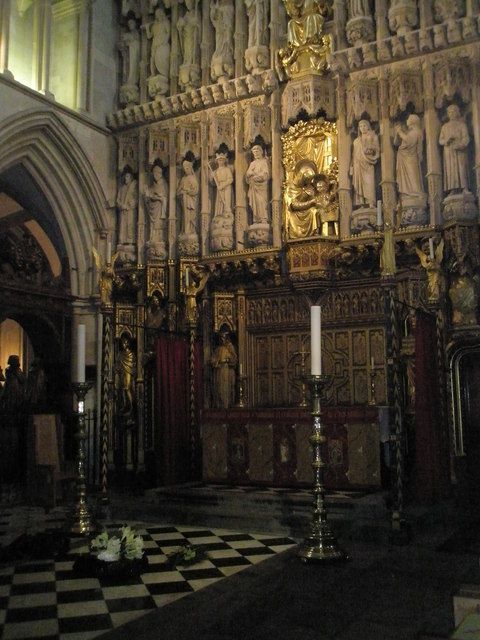
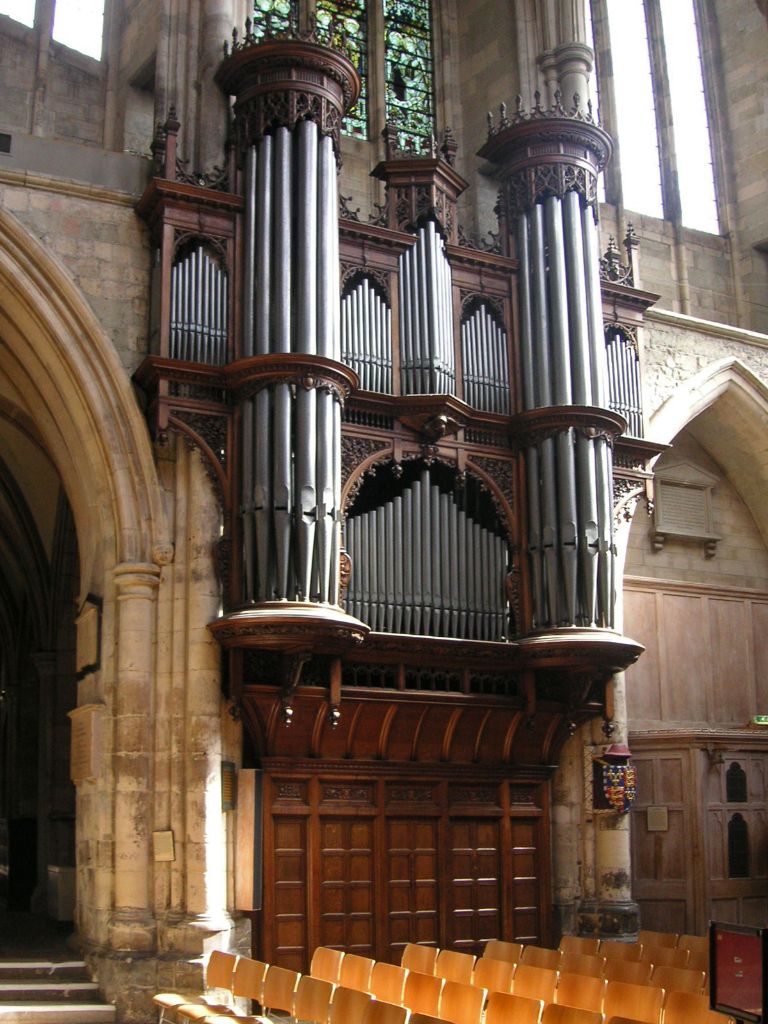
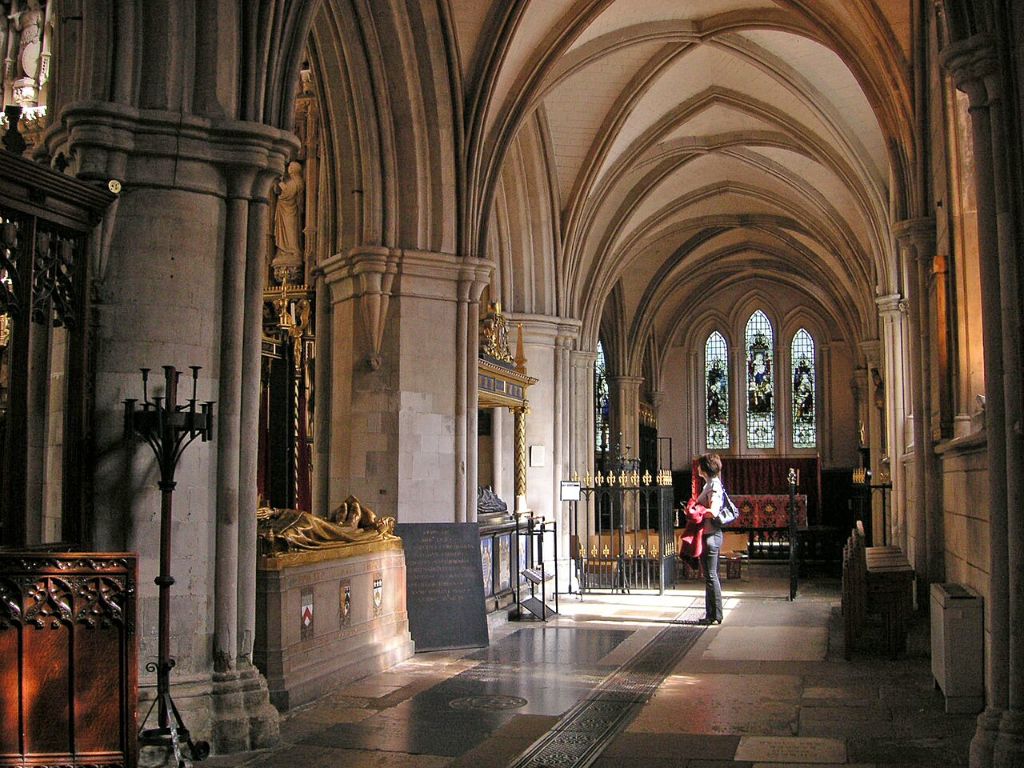
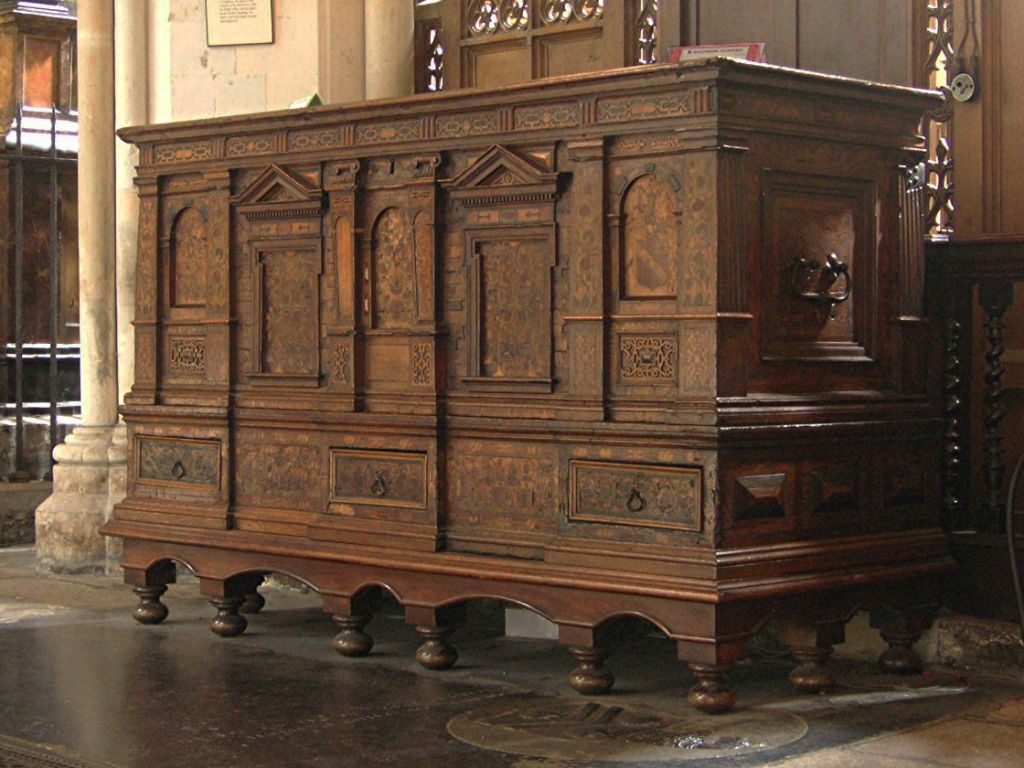
Photos: 1) Basher Eyre, CC BY-SA 2.0; 2) Amandajm, CC BY-SA 3.0; 3) Amandajm, CC BY-SA 3.0; 4) Amandajm, CC BY-SA 3.0; via Wikimedia Commons.
How do you get to Southwark Cathedral?
Southwark Cathedral is beside London Bridge, so the nearest station is London Bridge, and the cathedral’s own page describes an accessible route from the London Bridge Underground station. It says to leave the station by the Tooley Street exit and follow the route under London Bridge, passing Glaziers Hall, to reach the north side of the cathedral. That route is described as available throughout the current building works.
Those works matter for your arrival. The closures page says that because of building works at Minerva House, opposite the cathedral, the route to the main entrance on the north side will change periodically over the coming months, with alternative routes signposted. The advice is to allow extra time. If you are using a map app, trust the signs on the day over the app, because the signed route can change faster than a map does.
For onward travel, use the Transport for London journey planner on the day. We have not checked live services for this guide. If you are travelling with a pushchair or a wheelchair, the cathedral has an accessibility page that we recommend reading before you set out, since it is the cathedral’s own statement of what is available.
How can you fit the cathedral into a short London Bridge plan?
You can fit the cathedral into a short London Bridge plan by pairing a timed visit with a café stop and a wander through the market next door. The table below is a simple half-day sequence. “Time at the stop” is our suggestion, and the walking times are our own rough estimates, not official figures, because the cathedral’s route to the north entrance may be diverted while the building works continue.
| Start | Stop | What to do | Time at the stop | Walk to the next stop (estimate) |
|---|---|---|---|---|
| 10:00 | London Bridge station | Use the Tooley Street exit and follow the signed route | About 10 minutes | About 8 minutes |
| 10:20 | Southwark Cathedral | Look round the nave and pause for the hourly prayers if they begin while you are inside | About 60 minutes | About 3 minutes |
| 11:20 | Cathedral café | Coffee and a sit-down; check the café hours first | About 30 minutes | About 3 minutes |
| 11:55 | Borough Market area | Walk round the market stalls; check opening days on its own website | About 60 minutes | Finish here |
The plan adds up to about 2 hours 55 minutes in total (10 minutes at the station, 8 minutes of walking, 60 minutes at the cathedral, 3 minutes of walking, 30 minutes at the café, 3 minutes of walking and 60 minutes at the market, which is 174 minutes). The cathedral says prayers are held hourly between 10:30 and 16:30, and we have assumed they start at half past each hour, so confirm the times on the day. If you want to extend the day, our guide to things to do in London Bridge lists other sights within a short walk, so you can build a longer afternoon around the cathedral.


Photos: 1) Robert Lamb, CC BY-SA 2.0; 2) Christine Matthews, CC BY-SA 2.0; 3) Amandajm, CC BY-SA 3.0; via Wikimedia Commons.
What if the cathedral is closed or a service is on?
Plan for the possibility that part or all of the cathedral will be closed to visitors, because the building is a busy working church. The closures page says access may be restricted for events and that the shop and café stay open during those times unless stated otherwise. The table below gives the simplest fallback for each common problem.
| Problem | Swap to | Why it works |
|---|---|---|
| A service or event restricts the nave | Visit during one of the recommended windows, or return later in the day | The cathedral lists recommended visiting times when access is least restricted |
| The cathedral is closed for a private event (3 December, 09:30–14:45) | Come after 14:45, or use the café and shop first | The closures page says services continue in the Harvard Chapel and the café and shop normally stay open |
| The entrance route is diverted | Follow the signed alternative route and allow extra time | The cathedral warns that routes to the north entrance change during the works |
| You arrive when hourly prayers begin | Pause and join in, or wait for them to finish | The cathedral asks visitors to remain still for about two minutes |
| It is raining | Spend longer in the nave and the café | The cathedral is largely an indoor visit |
- Check the closures page and the services calendar on the morning of your visit.
- Allow extra time for the diverted route near Minerva House.
- Check shop and café hours if you plan to use them, especially around Christmas.
What can still cost money at Southwark Cathedral?
The cathedral’s visitor page does not list an admission charge, but several things around a visit can cost money. The café and shop are the obvious ones, and the shop also has an online store. Photographs for commercial use attract fees according to the cathedral’s photography policy. Events, concerts and tours are separate, and the “Tours and Groups” page on the official site is the place to ask about guided visits and group bookings.
A sensible budget for most visitors is the cost of a drink and perhaps a gift. If you are visiting with a group, contact the cathedral first rather than turning up, since the closures page makes clear that events can shut part or all of the building. For a wider day around this part of south London, our things to do in London as a tourist page is a good starting point for deciding what to add before or after the cathedral.
Related Questions
Is Southwark Cathedral worth visiting?
Yes, if you like layered history. The official history runs from a Domesday-era minster to a cathedral in 1905, with medieval, Tudor-era, Victorian and modern phases visible in one building. It is easiest to enjoy on a weekday, when the recommended sightseeing window is 09:00 to 17:00 and fewer areas are restricted.
How long do you need at Southwark Cathedral?
Allow about an hour for a relaxed look round, which is our own suggestion and not an official figure. Add time if you want a coffee in the café, a look in the shop, or to join the short hourly prayers, which last about two minutes and run from 10:30 to 16:30.
Is there a Shakespeare connection at Southwark Cathedral?
The cathedral’s history page says the church became the stage for many people involved in the theatres of Shakespeare’s day, including Edmond Shakespeare, John Fletcher and Philip Henslowe, who were all buried there. It does not claim that William Shakespeare himself worshipped there, so we do not either.
Can you visit Southwark Cathedral on a Sunday?
Yes. The cathedral is open from 08:30 to 17:00 on Sundays, with recommended sightseeing times of 12:30 to 15:00 and 16:00 to 17:00. Access to parts of the building is restricted during services, so a mid-afternoon visit is the safest option.
Where is the Southwark Cathedral cat?
Hodge the Cathedral Cat joined the cathedral in September 2020, according to the official page, which links to his story, a gallery and his Instagram account. We cannot promise where he will be on the day, so treat him as a bonus.
Sources
- Southwark Cathedral: Visitor information
- Southwark Cathedral: Our history
- Southwark Cathedral: Restricted access and closures
- Southwark Cathedral: Hodge the Cathedral Cat
- Southwark Cathedral: Services calendar
- Southwark Cathedral: Tours and groups
- Transport for London: Journey planner
Featured photo: Southwark Cathedral and Borough Market by It’s No Game, CC BY 2.0, via Wikimedia Commons.

Bài viết liên quan

Vietnam’s Most Romantic Places for Couples
The romantic places in Vietnam couples choose most, from Hoi An lantern nights and Ha [...]

Honeymoon in Vietnam: Saigon, a Beach Villa and Somewhere Cool
A 10 to 14-day Vietnam honeymoon itinerary: Saigon for food and city lights, a beach [...]

Best Resorts Near Saigon for a Weekend Escape
The best resorts near Saigon for a weekend: Vung Tau, Long Hai, Ho Tram, Binh [...]

TT Genesis Có Bao Nhiêu Căn Một Tầng? Mật Độ Có Cao Không?
Chung cư TT Genesis là dự án căn hộ tại Khu dân cư Đào Sư [...]

The Collectors’ Đã Nghiệm Thu Những Hạng Mục Nào?
The Collectors’ đã hoàn tất nghiệm thu hạng mục cọc móng bê tông cốt thép [...]

The Oasis TT Genesis – Ốc đảo thủy dưỡng 1.358 m²
The Oasis TT Genesis là tổ hợp tiện ích thủy dưỡng có diện tích khoảng [...]

Đất Nền Sổ Đỏ Dragon Eden – Thời Hạn Sử Dụng Đất Lâu Dài Hay Đến 2068?
Đất nền sổ đỏ Dragon Eden có hai mốc thời hạn khác nhau, áp dụng [...]

Tổng Thể Dragon Eden – Đọc Hiểu BĐQH 1/500 Và Cơ Cấu SDĐ
Mặt bằng Dragon Eden được quy hoạch theo mô hình khu đô thị hiện đại, [...]


